The most common mistake brands make with Meta ads isn’t overspending — it’s choosing the wrong format. Image ads, video ads, carousels, Reels — each format operates on a different user behavior logic and carries different algorithmic weight. In 2026, Meta’s ad system has fundamentally changed, and the cost of format mismatch is higher than ever.
.webp "Meta Ads in 2026: 9 Ad Formats Explained — Which Drives the Best ROI for Global Brands?")
1. Image Ads
The most straightforward format: a single image, ad copy, and a CTA button. Image ads appear across Facebook and Instagram feeds, Stories, and Reels placements. Low production barrier — the right starting point for testing new audiences and messages quickly.
Recommended specs for 2026: 1080×1080 (1:1) or 1080×1350 (4:5) for feed placements; 1080×1920 (9:16) for Stories and Reels. The 4:5 ratio takes up significantly more screen real estate on mobile and consistently outperforms square in engagement metrics.
✦ Action for global brands
- Keep images visually clean — put your main copy in the text field, not on the image itself
- Test 4:5 vertical ratio first; it performs better on mobile across most placements
- Use image ads for fast, low-cost testing of new audiences and value propositions
2. Video Ads
Video now accounts for the majority of ad impressions across Meta’s platforms. In 2025, Meta formally designated Reels and video content as its core strategic priority — video ads now carry significantly higher algorithmic weight than static image formats.
Key changes in 2026: Meta lowered the video view threshold from 10 seconds to 5 seconds, and expanded “Engage-Through Attribution” to include social interactions — likes, shares, saves, and comments — alongside view data. This means video ads now get credit for a wider range of conversion signals than before.
✦ Action for global brands
- The first 2–5 seconds are critical — lead with a hook that addresses a real pain point
- Keep videos under 15 seconds for best completion rates; anything over 30 seconds drops off sharply
- Design for both sound-on and sound-off; feed videos autoplay muted by default
Sources: Meta official announcements · HuiiMedia 2026
3. Carousel Ads
A single ad unit displaying 2–10 images or videos, each with its own link. Users swipe horizontally through the cards. Best use cases: product line showcases, multi-step storytelling, case study comparisons, and multi-SKU ecommerce promotion.
2026 data shows carousel ads achieve 40%+ higher deep engagement rates than single images, driven by active swiping behavior and higher save rates. Meta now enables dynamic creative by default for carousel formats, automatically testing the optimal card order for each audience.
✦ Action for global brands
- Give each card independent value — don’t split one image across multiple cards
- The first card is the most important; it determines whether users swipe at all
- Structure cards with a narrative arc — guide users from beginning to end
Sources: digitaltriumphs.tw 2026 · Meta official announcements
4. Collection Ads
A cover image or video paired with a grid of product images below. Tapping opens a full-screen Instant Experience — a fast-loading mobile storefront that keeps users inside the Meta ecosystem. Collection ads require a product catalog and are built specifically for mobile commerce.
From 2026, Instagram Reels supports carousel-format catalog video ads — and early data shows a 7% conversion lift over image-only catalog ads. Collection is currently the shortest purchase path available on Meta.
✦ Action for global brands
- Built for cross-border ecommerce and DTC brands — shortest purchase path on Meta
- Requires an accurate, well-maintained product catalog in Commerce Manager
- Video covers outperform static image covers — prioritize video for the hero creative
Sources: Meta official announcements · YinoLink 2025
5. Reels Ads
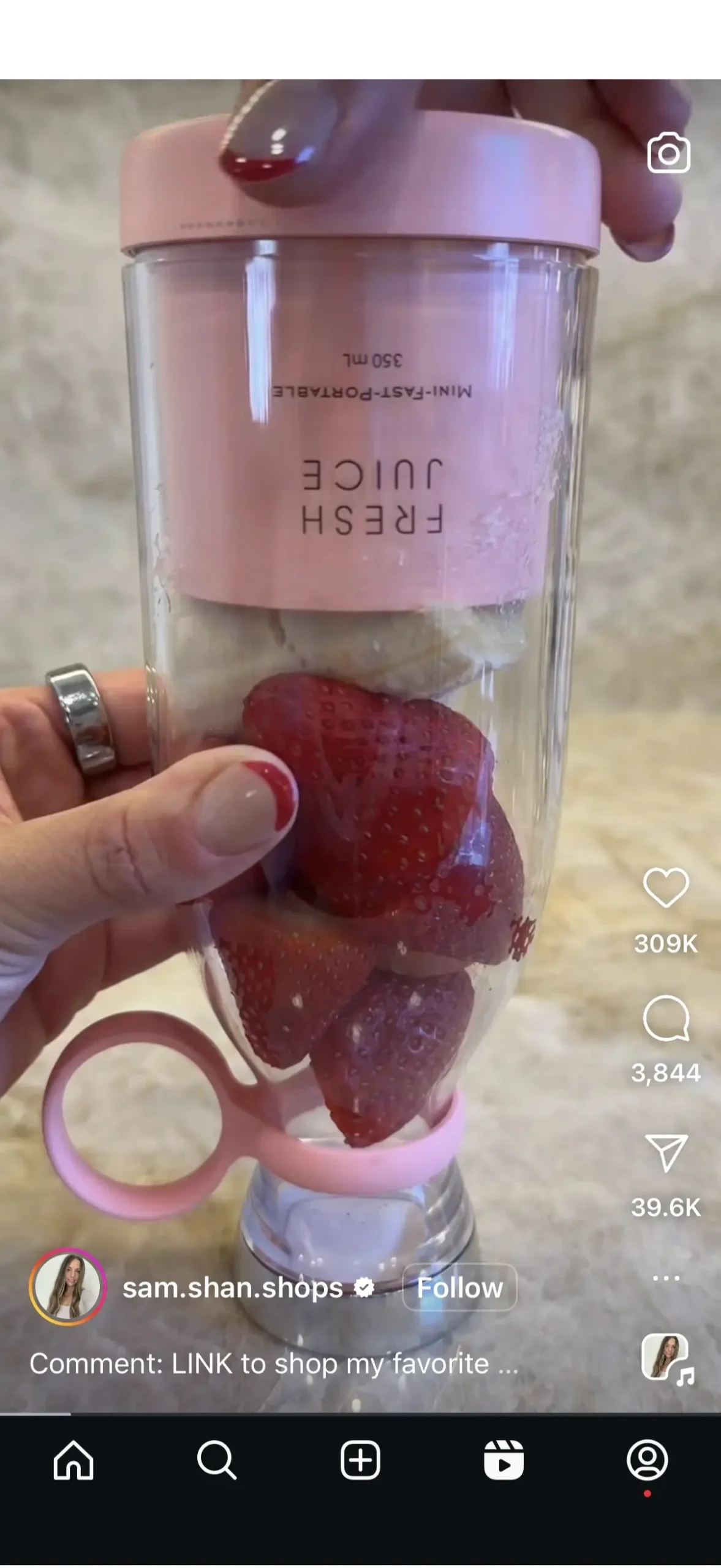
Full-screen 9:16 vertical video that appears natively inside the Reels content stream. By 2025, over 50% of Instagram ad spend was already concentrated on Reels placements — and that share continues to grow.
The key advantage of Reels ads: compared to Feed and Stories, Reels placements typically have 10+ organic videos between each ad. Lower ad density means lower fatigue — and Reels ads deliver 3× higher CTR than traditional banner formats in immersive feed environments.
New in 2026: Meta announced expanded Reels Trending Ads at NewFronts 2026, giving brands priority placement during major cultural moments. Meta also launched an AI video generation beta that automatically creates UGC-style avatar videos and AI voiceovers for ads.
✦ Action for global brands
- Make it look like organic content — don’t open with your logo
- Sound-on Reels ads consistently outperform silent versions
- Never repurpose content with TikTok watermarks — Meta’s algorithm penalizes it
Sources: jiadingqiang.com 2026 · HuiiMedia 2026 · Meta NewFronts 2026
6. Stories Ads
Full-screen vertical ads across Facebook, Instagram, and Messenger Stories. Auto-plays for up to 15 seconds and supports images, video, and carousel formats. The immersive format makes it ideal for time-sensitive promotions, brand reminders, and event announcements.
✦ Action for global brands
- You have 3 seconds to stop the tap — make them count
- Design for silent viewing first; add captions so the message lands without audio
- Respect safe zones — keep key content away from the top and bottom edges where UI overlaps
7. Lead Ads
When a user clicks, Meta pre-populates a form with their profile data — name, email, phone number — so they can submit without leaving the platform. Removing the redirect step consistently lifts form completion rates above what external landing pages deliver.
✦ Action for global brands
- The go-to format for B2B lead generation — inquiries, event sign-ups, whitepaper downloads
- Fewer form fields = higher completion rate; only ask for what you actually need
- Connect to Messenger or WhatsApp for instant follow-up the moment a lead submits
8. Partnership Ads
The evolution of Branded Content ads. Partnership Ads let brands run creator or influencer posts as paid ads — with both the brand account and the creator’s account shown in the ad header. You get the authenticity of creator content with the precision of paid targeting.
In 2025, Meta paid creators nearly $3 billion — up 35% year-over-year. Instagram’s creator marketplace now has over 1.5 million discoverable creators available for brand partnerships.
✦ Action for global brands
- Best fit for DTC brands, consumer products, and categories where social proof drives conversion
- Match creator tone to brand voice — authenticity is the core asset here
- Creators must have an Instagram professional account to run Partnership Ads
Source: Meta NewFronts 2026
9. Advantage+ Campaigns (AI-Automated Ads)

Meta’s flagship AI-driven ad product for 2026 — encompassing Advantage+ Shopping Campaigns, Advantage+ Audience, and the Flexible Ad Format. Upload up to 10 images and videos, and Meta’s system automatically determines which creative combination to show each individual user.
The 2026 algorithm shift: Meta’s GEM (Generative Ads Recommendation Model) and the Andromeda retrieval engine are now fully deployed across all accounts. The core logic is “creative is targeting” — the algorithm no longer relies primarily on your audience settings. Instead, it reads the creative itself — visuals, copy, tone, emotional signals — and finds the users most likely to respond. GEM is 4× more efficient at driving performance gains than the previous model, with a 5% conversion lift on Instagram and 3% on Facebook Feed.
✦ Action for global brands
- Creative quality now matters more than audience settings — invest accordingly
- Upload diverse formats (images + video + carousel) to give the AI maximum testing range
- Conversion tracking must be complete — Advantage+ optimization depends entirely on signal quality
Sources: glosellers.com 2026 · HuiiMedia 2026
How to Choose the Right Format
| Marketing Objective | Recommended Format |
|---|---|
| Brand awareness / reach | Video Ads, Reels Ads |
| Product showcase / comparison | Carousel Ads, Collection Ads |
| Ecommerce conversion | Collection Ads, Advantage+ Shopping |
| B2B lead generation | Lead Ads |
| Influencer / creator amplification | Partnership Ads |
| Time-sensitive promotions | Stories Ads, Reels Ads |
| Full-funnel performance | Advantage+ Campaigns |
The defining principle of Meta advertising in 2026 is this: creative is everything. Regardless of which format you choose, creative quality is the primary variable — the algorithm finds the right audience for your creative, not the other way around.
Frequently Asked Questions
What’s the difference between Facebook and Instagram ads? Do I need to run them separately?
Facebook and Instagram are managed through the same Ads Manager account. Their audiences differ — Facebook skews broader across age groups, while Instagram tends to be younger and more visually oriented. The recommended approach is to enable Advantage+ placements and let Meta’s system allocate spend, then review placement-level data to decide whether to optimize creatives separately for each platform.
Meta’s algorithm changed in 2026 — does my old strategy still work?
The fundamentals haven’t changed: strong creative, clear conversion goals, and sufficient budget still drive performance. What’s changed is that the algorithm is now far better at finding the right audience autonomously — which means audience targeting matters less, and creative diversity matters more. Campaigns that relied heavily on granular interest stacking need to shift toward a creative-first testing approach.
How should global brands set their Meta Ads budget?
There’s no minimum spend requirement, but to generate statistically meaningful data, plan for at least $20–50 per day per ad set over a minimum of 7–14 days. Meta’s algorithm has a learning phase — typically requiring 50 optimization events — and underfunding a campaign prevents it from exiting that phase, leading to unstable and unreliable results.
Do video ads always outperform image ads?
Not necessarily. Video has a clear advantage for brand awareness and Reels placements, but image ads remain highly effective for direct response use cases like promotions and product showcases — and they’re faster to produce and easier to iterate. The best approach is to test both formats and let the data guide allocation.
What is Meta’s attribution window?
The default attribution setting is 7-day click and 1-day view. In 2026, Meta lowered the video view threshold from 10 seconds to 5 seconds, and expanded “Engage-Through Attribution” to include social interactions — likes, shares, saves, and comments. This means video ads now receive credit for a broader range of downstream conversion activity than before.
Want to build a Meta Ads strategy that matches how the platform actually works in 2026? Learn more about our Meta/Facebook Ads services, or get in touch with us directly.